TC-treated or untreated: choosing the right culture surface
The same polystyrene dish can behave very differently for your cells. A short guide to surface treatment, flask caps and formats.
Polystyrene is clear, stable and easy to mould, which is why most cell culture vessels are made from it. On its own, though, polystyrene is hydrophobic, and many cell types struggle to attach to it. Tissue culture (TC) treatment changes that.
What TC treatment does
TC treatment modifies the polystyrene surface so it becomes more hydrophilic. Adherent cells attach, spread and grow more consistently on it. MODMAT dishes, plates and flasks are available with TC treatment to encourage cell adhesion and growth.
When to use untreated vessels
- Suspension cells that grow floating in the medium.
- Work where you want to limit attachment, for example when forming spheroids or harvesting cells without scraping.
- Microbiology, where Petri dishes hold agar rather than adherent cells.
Vented or sealed flask caps
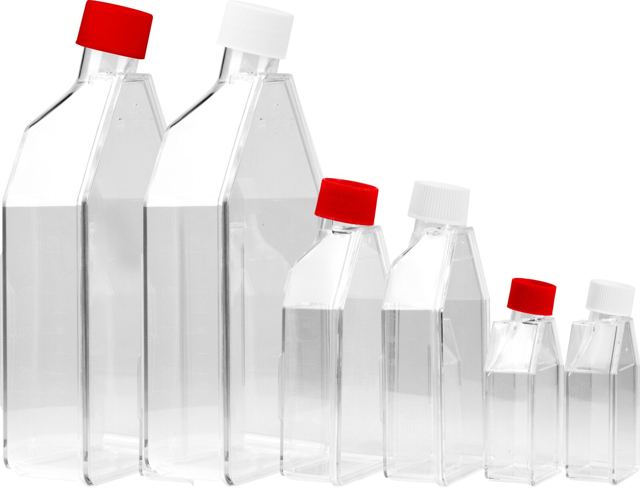
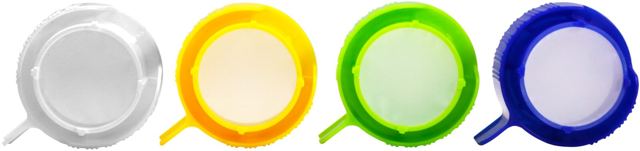
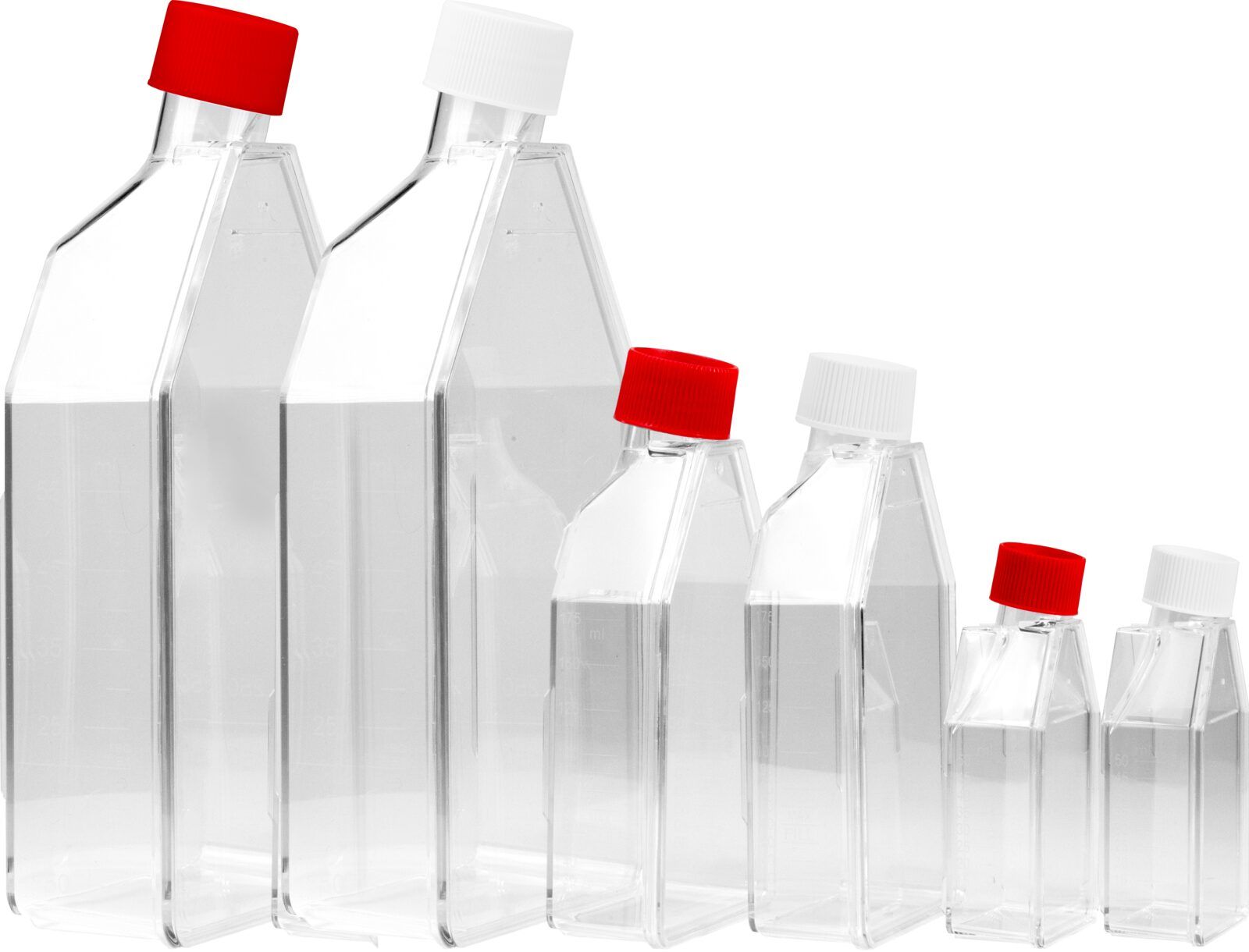
Flask caps matter as much as the surface. A sealed cap keeps a closed environment and suits culture in a CO₂ incubator. A vented cap has a 0.22 µm filter membrane that allows continuous air exchange while keeping microbes out, and suits constant-temperature incubators.
Picking a format
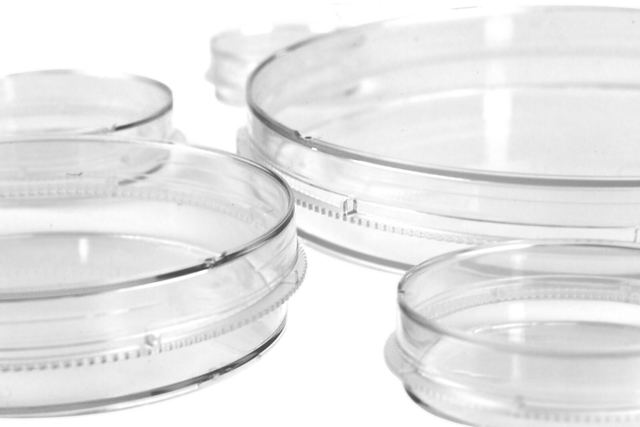
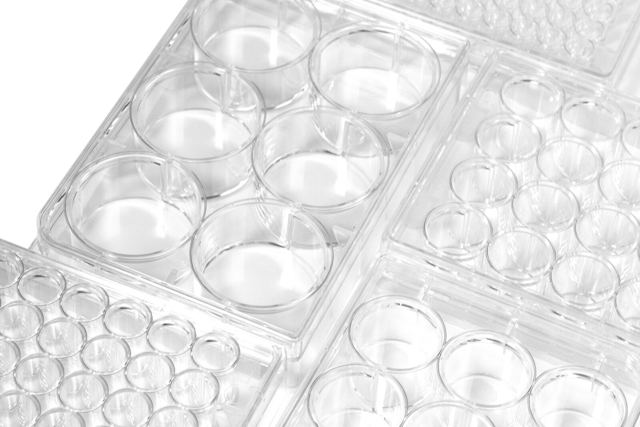
Dishes (35 to 150 mm) give a large flat area for expansion and imaging. Multiwell plates (6 to 96 wells) let you run many conditions side by side. Flasks are built for long-term culture and scale-up; a short, wide, angled neck makes it easier to reach in with a serological pipette or cell scraper.
พอลิสไตรีนใส แข็งแรง และขึ้นรูปง่าย ภาชนะเลี้ยงเซลล์ส่วนใหญ่จึงผลิตจากวัสดุนี้ แต่พอลิสไตรีนโดยธรรมชาติไม่ชอบน้ำ เซลล์หลายชนิดจึงเกาะได้ยาก การปรับพื้นผิวแบบ Tissue Culture (TC) ช่วยแก้ปัญหานี้
การปรับพื้นผิว TC ทำอะไร
การปรับพื้นผิว TC ทำให้ผิวพอลิสไตรีนชอบน้ำมากขึ้น เซลล์ชนิดเกาะติดจึงเกาะ แผ่ และเจริญได้สม่ำเสมอขึ้น จาน เพลต และขวดเลี้ยงเซลล์ของ MODMAT มีรุ่นที่ผ่านการปรับพื้นผิว TC เพื่อส่งเสริมการเกาะและการเจริญของเซลล์
เมื่อไรควรใช้ภาชนะที่ไม่ผ่าน TC
- เซลล์แขวนลอย ที่เจริญโดยลอยอยู่ในอาหารเลี้ยงเซลล์
- งานที่ต้องการลดการเกาะ เช่น การสร้างสเฟียรอยด์ หรือการเก็บเซลล์โดยไม่ต้องขูด
- งานจุลชีววิทยา ที่จานเพาะเชื้อใช้ใส่วุ้นแทนการเลี้ยงเซลล์เกาะติด
ฝาแบบมีรูระบายหรือแบบปิดสนิท
ฝาขวดสำคัญไม่แพ้พื้นผิว ฝาปิดสนิท ให้สภาพแวดล้อมแบบปิด เหมาะกับการเลี้ยงในตู้บ่ม CO₂ ส่วนฝามีรูระบาย มีเมมเบรนกรองขนาด 0.22 µm ให้อากาศแลกเปลี่ยนได้ต่อเนื่องและกันจุลินทรีย์ เหมาะกับตู้บ่มอุณหภูมิคงที่
เลือกรูปแบบภาชนะ
จานเลี้ยงเซลล์ (35 ถึง 150 มม.) ให้พื้นที่ราบกว้างสำหรับขยายเซลล์และถ่ายภาพ เพลตหลายหลุม (6 ถึง 96 หลุม) ช่วยทดสอบหลายสภาวะพร้อมกัน ส่วนขวดเลี้ยงเซลล์เหมาะกับการเลี้ยงระยะยาวและการขยายปริมาณ คอขวดสั้น กว้าง และเอียง ช่วยให้สอดปิเปตหรือที่ขูดเซลล์ได้ง่าย